
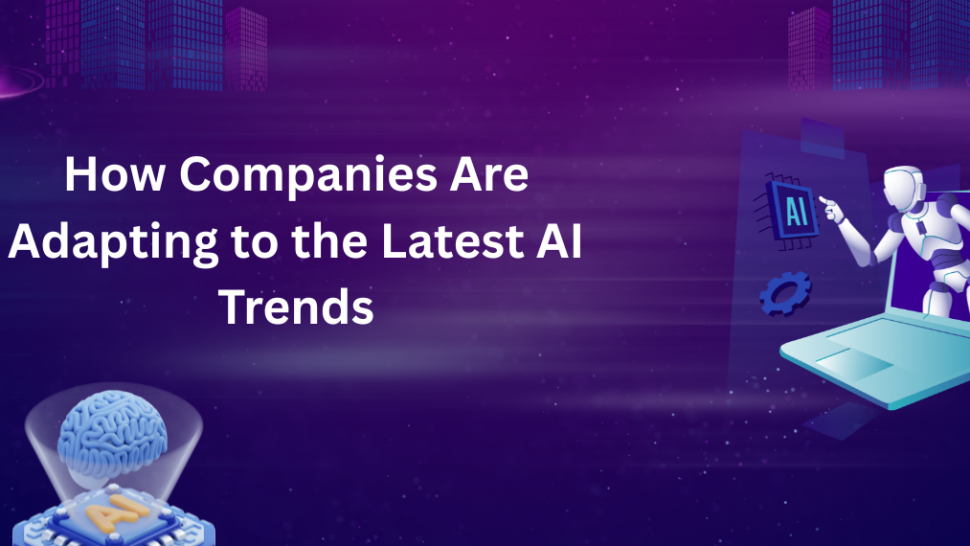

Artificial intelligence (AI) continues to redefine the business landscape in 2026. From small startups to multinational corporations, companies are increasingly adopting AI technologies to improve efficiency, enhance customer experience, and gain a competitive edge. The pace of innovation in AI has accelerated, and staying abreast of the latest AI trends has become crucial for businesses aiming to thrive in an ever-evolving market.
The Rise of AI in Business
Over the past few years, AI has moved beyond experimental projects and is now deeply embedded in core business operations. Companies are leveraging AI in areas such as customer support, supply chain management, marketing, and decision-making. Chatbots powered by AI, predictive analytics, and intelligent automation tools have become standard in many industries, allowing businesses to reduce costs and improve service quality simultaneously.
Emerging AI technologies like generative AI, advanced natural language processing (NLP), and AI-powered data analytics are creating new opportunities for innovation. Businesses that invest in these technologies are not just optimizing their current operations—they’re preparing for the future of AI-driven markets.
Key AI Trends Shaping Businesses in 2026
Generative AI Integration
Generative AI Services, capable of creating content, designs, and even software code, is one of the most impactful AI trends this year. Companies are using generative AI to accelerate product development, automate content creation, and enhance marketing campaigns. From generating high-quality graphics to drafting legal documents, the applications of generative AI are vast, saving time and resources while boosting creativity.
AI-Powered Decision Making
Decision-making is becoming increasingly data-driven. Businesses are adopting AI models that analyze large datasets, identify patterns, and provide actionable insights. Predictive analytics tools help companies forecast market trends, understand consumer behavior, and optimize supply chains. This trend is particularly valuable for industries where speed and accuracy are crucial, such as finance, healthcare, and logistics.
AI Ethics and Governance
As AI adoption grows, so does the focus on ethical AI use. Companies are developing frameworks for responsible AI deployment, including transparency, accountability, and bias mitigation. Ethical AI practices not only ensure compliance with evolving regulations but also strengthen customer trust and brand reputation.
Human-AI Collaboration
Rather than replacing human workers, AI is increasingly seen as a collaborative partner. Tools that enhance human capabilities, such as AI-driven project management, collaborative robots (cobots) in manufacturing, and intelligent virtual assistants, are helping employees perform tasks more efficiently. Companies investing in AI-human collaboration are experiencing improved productivity and employee satisfaction.
AI in Cybersecurity
With cybersecurity threats becoming more sophisticated, AI is playing a critical role. AI-driven security systems detect anomalies, predict potential breaches, and respond to threats in real time. This not only protects sensitive data but also reduces the cost and impact of security incidents.
Emerging AI Technologies Transforming Industries
Several emerging AI technologies are redefining how businesses operate:
- Reinforcement Learning: Used in logistics and robotics to optimize processes and decision-making.
- Edge AI: Enables real-time data processing on devices, reducing latency and enhancing privacy.
- Explainable AI (XAI): Provides transparency in AI decisions, helping industries like finance and healthcare comply with regulations.
- AI-Enhanced Robotics: Improves efficiency in manufacturing, warehousing, and delivery services.
These technologies are no longer futuristic concepts—they are actively being integrated into business strategies worldwide.
How Companies Are Implementing AI
Leading Artificial Intelligence development companies and in-house AI teams are designing tailored solutions to meet specific business needs. For instance, retail companies use AI to predict demand and personalize shopping experiences, while healthcare providers leverage AI for diagnostic assistance and patient monitoring. Even small businesses are adopting AI-powered tools for marketing automation, customer service, and data analytics, leveling the playing field in competitive markets.
Implementation strategies often include:
Pilot Projects: Testing AI tools on a small scale before full-scale deployment.
Training Programs: Upskilling employees to work effectively with AI systems.
Partnerships with AI Development Agency: Collaborating with experts to access the latest AI capabilities without building from scratch.
Future of AI in Business
The future of AI looks promising. As AI technologies continue to evolve, businesses can expect more sophisticated tools that provide deeper insights, automate complex processes, and enable personalized customer experiences. Companies that stay ahead of AI trends are likely to dominate their industries, while those slow to adapt risk falling behind.
Investing in AI today is not just about technology—it’s a strategic move that influences long-term business growth. The integration of AI into core operations is transforming the AI industry insights landscape, creating smarter, faster, and more resilient organizations.
Conclusion
In 2026, AI is no longer optional—it is a business imperative. Companies that embrace the latest artificial intelligence trends are unlocking unprecedented efficiency, innovation, and competitive advantage. By leveraging emerging AI technologies, implementing ethical practices, and fostering human-AI collaboration, businesses are not just adapting—they are shaping the future of AI.
For companies looking to stay competitive, partnering with an experienced AI development company can accelerate adoption and ensure they harness the full potential of AI in business. Understanding AI industry insights and trends is the first step toward building a future-ready organization.
Share the News