

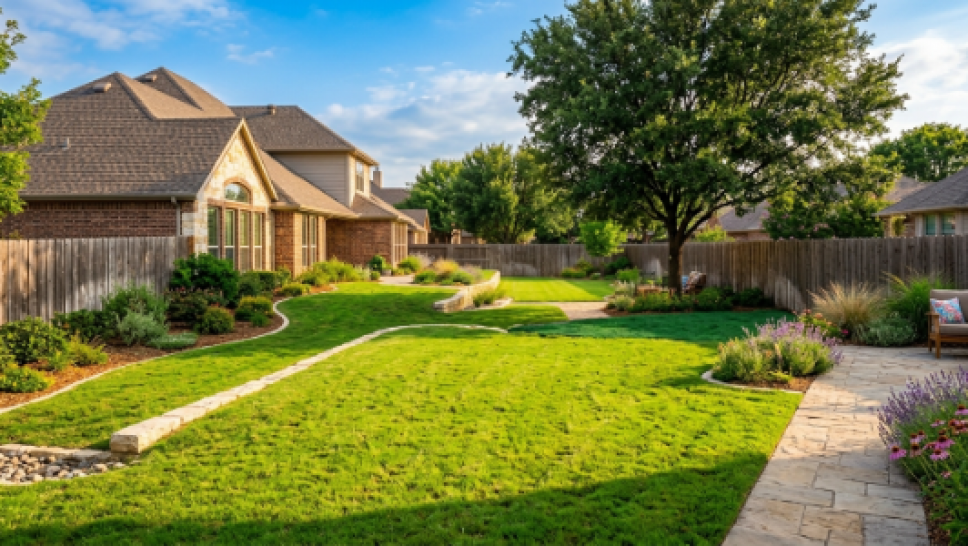

A residential yard rarely has the same conditions from one end to the other. One section may receive full afternoon sun, another may sit beneath mature trees, while a side strip may experience constant foot traffic. These differences affect how grass grows and how much attention each area requires.
That is why effective lawn service southlake should not be viewed as a one-size-fits-all routine. Understanding the individual parts of a property can help homeowners make better decisions about mowing, watering, turf replacement, soil care, and landscape improvements.
Every Section of the Yard Has Its Own Demands
It is easy to look at a lawn as one large green surface, especially from the street. In reality, several small environmental differences can exist within the same property.
Sun exposure, soil moisture, drainage, shade, foot traffic, and nearby structures all influence turf performance. A patch beside the driveway may experience heat and reflected sunlight, while grass beneath a tree may struggle with limited light and competition from roots.
A maintenance routine becomes more effective when these differences are recognized instead of treating every section identically.
Homeowners can begin by looking at:
Which areas receive the most direct sunlight
Where water tends to collect or disappear quickly
Which sections receive regular foot traffic
Where grass appears thinner than the surrounding turf
These observations do not require specialized equipment. Simply paying attention to how the yard changes throughout the day can reveal useful information.
Front Lawns Often Have Different Priorities
The front lawn is usually the most visible part of a property, but appearance is not its only consideration. It also needs to work alongside the driveway, sidewalks, entryway, and street-facing landscape.
Grass near pavement can experience more heat than turf farther inside the yard. Edges can also become uneven when vehicles, pedestrians, or maintenance equipment repeatedly pass nearby.
Keeping the Entrance Area Consistent
A well-maintained front lawn benefits from clean transitions between grass and surrounding surfaces. Uneven edges can make an otherwise healthy yard look neglected.
Regular mowing helps control growth, but homeowners should also watch for grass creeping into walkways, bare areas near heavily used entrances, and compacted soil around sidewalks.
This is where lawn mowing southlake becomes part of a larger maintenance picture. Cutting the grass keeps growth under control, but the condition of the surrounding hardscape and soil also influences how polished the front yard looks.
Backyard Conditions Can Be Completely Different
Backyards often have more varied uses than front lawns. Families may have patios, play areas, outdoor furniture, pets, pools, gardens, or frequently used pathways.
These activities can create concentrated wear. If everyone walks through the same section to reach the patio, that strip of grass may decline faster than areas that receive little traffic.
Rather than continually repairing worn turf, homeowners can examine why the damage keeps occurring. A permanent pathway or defined transition may protect the lawn while making movement through the yard easier.
A useful backyard layout might include:
An open lawn area for recreation
A defined route between the house and outdoor features
A separate space for planting or decorative elements
Durable surfaces around frequently used seating areas
The goal is not to eliminate grass. It is to use turf where it performs well and give other areas a purpose that matches their conditions.
Shade Changes the Way Grass Performs
A lawn beneath mature trees can look very different from one growing in an open area. Shade reduces the amount of sunlight available to turf, while tree roots may compete for moisture and nutrients.
This does not mean every shaded section should automatically be removed. The first step is determining how much sunlight the area actually receives and whether the existing grass is appropriate for those conditions.
In some cases, adjusting the surrounding landscape can help. Selective pruning, changes to nearby features, or reducing the amount of turf may make the area easier to manage.
Don't Force Every Corner to Be Turf
One of the more useful landscape decisions is accepting that certain parts of a property may be better suited to something other than grass.
A shaded corner could become a small seating area. A narrow strip beside a fence could be incorporated into a planting bed. A difficult-to-access section might require a low-maintenance treatment rather than frequent mowing.
Thoughtful landscap design makes room for these differences. Instead of asking how to make every part of the yard identical, homeowners can decide what each area should accomplish.
Drainage Can Change the Entire Maintenance Routine
Water movement is another major factor that separates one yard section from another. Low areas may remain wet after rainfall, while elevated or exposed sections can dry much faster.
Repeated standing water can weaken turf and create muddy conditions. At the same time, water that runs away too quickly may leave grass struggling during dry periods.
Before replacing damaged grass, homeowners should determine whether drainage is contributing to the problem.
Some warning signs include:
Puddles that remain after surrounding areas have dried
Soil that stays soft for extended periods
Grass that repeatedly becomes thin in the same location
Erosion or visible movement of soil
Water flowing toward structures instead of away from them
Correcting drainage can sometimes do more for a struggling lawn than adding another round of routine treatments.
Soil Condition Is Not Always Consistent
Even within one property, soil can vary. Areas near construction, driveways, patios, or recently disturbed ground may have different compaction and drainage characteristics than established lawn areas.
Compacted soil gives roots less room to develop and can make it harder for water and air to move through the root zone. Heavy traffic can make the issue worse over time.
Aeration may help in appropriate situations by opening pathways through compacted soil. However, it should be considered as part of a broader lawn-care strategy rather than a universal treatment.
Homeowners should also avoid assuming that discolored grass automatically means the lawn needs fertilizer. Poor drainage, mowing stress, pests, inadequate sunlight, and watering problems can create similar visual symptoms.
Side Yards Deserve More Attention
Side yards are often among the most challenging spaces because they tend to be narrow, shaded, or difficult to reach with lawn equipment. Yet they can play an important role in connecting different parts of a property.
A side yard may function as an access route, utility corridor, drainage area, or simple transition between the front and back.
If the space is too narrow for comfortable mowing, redesigning it may make more sense than repeatedly trying to maintain awkward turf.
A defined walkway can create easier access, while a narrow planting area can reduce the amount of grass that needs routine attention. The key is leaving sufficient clearance for utilities and maintenance.
How Landscape Design Affects Lawn Work
The arrangement of non-lawn features directly affects how easily the remaining grass can be maintained. A patio with irregular edges, scattered planting beds, or decorative objects placed throughout the turf can create additional obstacles during mowing.
That does not mean a yard should be completely open and simple. It means the layout should consider how the property will be cared for after the project is finished.
Good landscap design can create clear boundaries and logical transitions. When lawn areas have defined shapes, mowing becomes more predictable and trimming requirements may be reduced.
Homeowners should think about both the appearance of a new feature and the maintenance space around it.
When Existing Grass Should Be Replaced
Some lawn sections can recover through improved maintenance, while others may be too damaged or poorly suited to their location.
If grass repeatedly fails in the same area despite appropriate care, the problem may not be the maintenance routine itself. The site may have unsuitable soil, excessive shade, drainage problems, or heavy traffic.
In those situations, sod installation can be one possible option, particularly when a homeowner wants an established turf surface rather than waiting for seed to develop.
However, new sod cannot correct every underlying problem.
Preparation Comes Before New Turf
Before installing new turf, homeowners should examine:
The existing soil condition
Surface grading and drainage
Available sunlight
Expected foot traffic
The type of grass suited to the location
If the underlying issue remains unresolved, newly installed grass may eventually experience the same difficulties as the previous lawn.
Mowing Should Follow the Yard's Conditions
A consistent mowing routine is important, but consistency does not necessarily mean using exactly the same schedule throughout the year.
Grass growth changes with weather and seasonal conditions. Cutting too much at once can stress the turf, while allowing the lawn to become excessively tall can make the next mowing session more difficult.
Sharp mower blades also matter. A clean cut is generally preferable to repeatedly tearing the grass with dull equipment.
For larger or more complex properties, lawn mowing southlake may need to be coordinated with edging, trimming, cleanup, and other maintenance tasks so the finished yard looks consistent rather than simply freshly cut.
Seasonal Changes Can Shift Priorities
A lawn that looks healthy during one part of the year may need a different approach several months later. Temperature, rainfall, sunlight, and growth patterns all influence how turf responds.
Homeowners should pay particular attention after periods of unusual weather. Extended heat, heavy rain, or sudden changes in temperature can expose weaknesses that were not obvious before.
A flexible maintenance plan can account for these shifts instead of relying on a fixed list of tasks.
Useful seasonal observations include:
Changes in grass color or density
Increased weed activity
Areas drying faster than usual
Drainage problems after heavy rainfall
Changes in how quickly the lawn grows
These details can help determine where attention should be focused.
Professional Assistance for More Complicated Properties
Not every homeowner needs ongoing professional maintenance, but larger yards or properties with several problem areas can benefit from experienced assistance.
The Grounds Guys of Arlington can provide professional lawn and landscape support for homeowners who need help coordinating routine maintenance with broader outdoor improvements. Professional input can be especially useful when lawn condition, drainage, turf replacement, and landscape layout all need to be considered together.
The objective should be practical: identify what each part of the property needs and develop a maintenance approach that remains manageable after the work is complete.
Common Mistakes That Create Uneven Results
Many inconsistent-looking lawns are not caused by one major mistake. Instead, several small decisions can gradually produce different conditions across the property.
Homeowners should avoid:
Treating shaded and sunny areas exactly the same
Ignoring drainage issues beneath damaged turf
Mowing heavily worn areas without addressing foot traffic
Installing sod without preparing the ground
Adding landscape features without considering future access
Another mistake is making major changes based solely on appearance. A brown patch may look like a simple turf problem, but its real cause could be water, soil, shade, or traffic.
Finding the reason first can save both time and money.
Creating a Yard That Is Easier to Maintain
A functional property does not have to contain identical lawn conditions everywhere. In fact, accepting differences between yard sections can make the overall landscape easier to manage.
The front yard can prioritize clean presentation. The backyard can accommodate recreation and outdoor living. Side areas can focus on access and drainage. Shaded corners can serve a different purpose altogether.
When each section has a clear role, maintenance becomes more logical.
This is also where sod installation should be approached carefully. New turf can improve a damaged section, but only when the chosen location and underlying conditions support healthy growth.
Looking Beyond Short-Term Appearance
A newly mowed lawn or freshly installed landscape can look impressive immediately, but long-term performance depends on what happens afterward.
Homeowners should consider whether they can realistically maintain the chosen layout, whether irrigation can reach every relevant area, and whether future growth from trees or plants could change conditions.
A landscape that works today may need adjustments as trees mature or household use changes. Building enough flexibility into the design can make future maintenance easier.
Conclusion
Different parts of a residential property place different demands on lawn care. Sunny areas, shaded corners, high-traffic sections, slopes, side yards, and drainage zones each respond differently to maintenance.
Understanding those differences helps homeowners avoid treating every patch of grass the same way. Lawn service southlake can be more effective when mowing, soil care, watering, turf replacement, and landscape improvements are considered according to the actual conditions of each area.
Whether the solution involves adjusting a mowing routine, improving drainage, changing the layout, or using sod installation for a damaged section, the most useful approach is to understand the reason behind the problem first. A yard becomes easier to maintain when its design and care routine work together rather than against one another.
Frequently Asked Questions
Why does grass grow differently in different parts of the same yard?
Sunlight, soil, water availability, drainage, foot traffic, and nearby trees can vary across a single property. These differences affect how quickly and evenly turf develops.
Does every lawn need the same mowing schedule?
No. Mowing frequency should reflect grass growth, weather, season, and turf condition. Different sections may also require additional attention because of shade or traffic.
Can poor drainage damage an otherwise healthy lawn?
Yes. Persistent excess water can weaken turf and affect soil conditions. Identifying the source of the water problem is important before replacing damaged grass.
When is sod a reasonable option?
Sod may be useful when a lawn section is severely damaged or needs faster turf establishment. The ground should be evaluated and prepared before installation.
Can landscape design reduce lawn maintenance?
It can. Clearly defined outdoor zones, pathways, and planting areas can reduce awkward mowing sections and make the property easier to access and maintain.
Should shaded areas always be converted into planting beds?
Not necessarily. The amount of shade, grass type, soil, and intended use of the area should be considered before deciding whether to keep or replace turf.



Share the News