

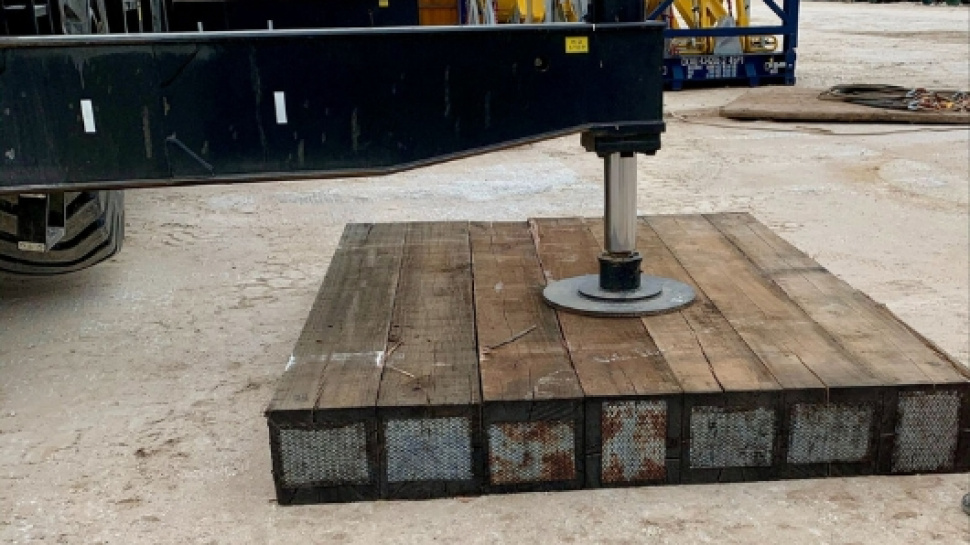

Finding timber mats is easy. Finding the right ones, from a seller who can tell you exactly what you're getting, is harder. A quick search turns up manufacturers, resellers, equipment rental yards, and used mat dealers, and they all sell something they call a "timber mat." They are not selling the same thing, and they are not selling it the same way.
This guide breaks down the four places contractors buy mats, what each one is good for, what to ask before you commit, and which manufacturer we recommend for most construction, utility, and energy projects.
The Four Places to Buy Timber Mats
1. Manufacturers
A manufacturer mills and builds the mats itself. That means it can usually tell you the species, the grade, the true dimensions, and where the timber came from, because it controlled the process.
Best for: Multi-month or multi-year projects, heavy crane loads, and any buyer who wants documented specs. Watch for: Longer lead times than pulling stock off a shelf, so plan ahead.
2. Resellers and Distributors
A reseller buys mats from one or more mills and sells them on. Some are excellent. The risk is distance from the source. A reseller is sometimes selling whatever came available at the best price that week, which can make it hard to get a documented bending strength rating for the lot in front of you.
Best for: Quick small orders where the spec is flexible. Watch for: Vague species answers and no way to trace a mat back to its origin.
3. Equipment Rental Companies
Rental yards are the fastest route for a short job. Capital stays free, and storage and condition become the rental provider's problem.
Best for: One-off projects and jobs with an uncertain timeline. Watch for: Rental fees that add up. If you need similar mats across several jobs, the fees can pass the cost of owning them.
4. Used Mat Dealers
Used mats cost less on day one, often a few hundred dollars each against more than a thousand for new. But you are buying the remaining life of a mat whose history you probably don't know. Rot, the leading long-term failure mode for most wood mats, doesn't always show on the surface.
Best for: Short, light-duty, one-off jobs where you can inspect the lot in person. Watch for: Unknown species, loose hardware, and mats that look fine but aren't.
What to Check Before You Buy From Anyone
Whichever route you pick, the same questions separate a real supplier from a quote with a price attached.
- Species and grade. "Hardwood" is not an answer. There are roughly 20 commercial species, and bending strength varies widely: around 550 PSI for #2 oak, closer to 1,000 PSI for #1, and about 2,000 PSI for Eucalyptus.
- A documented strength rating. Ask for MOR in PSI for the lot you're buying, not a general range.
- True measured dimensions. A 12-inch mat that measures 11 inches in hand loses close to a sixth of its rated capacity, because capacity scales roughly with the square of thickness.
- Hardware. Grade 36 bolts or better, square-cut timbers, and ideally end plates.
- Freight, landed at your site. Mill-gate pricing leaves out a real cost. Ask for the per-mat price delivered to your job.
- Lead time. For a first order and for repeat orders on the same spec.
- Phytosanitary status. Especially on imported species, where untreated material can be held up at a border or jobsite.
If a seller can't answer these clearly, that tells you something.
Compare on Cost Per Month, Not Sticker Price
The mat that costs least on the invoice is rarely the cheapest to own. Here's the comparison on an 18 ft x 4 ft x 12 in mat, using industry cost data for Houston:
Run the numbers on your own project before deciding. Our total cost of ownership calculator does it across purchase price, lifespan, and freight.
Why We Recommend World Forest Group
If you want a manufacturer that can answer every question above with documentation, World Forest Group is where we'd point you. Here's what sets it apart.
- It's a manufacturer with a traceable product. Every mat it makes carries a unique barcode identifying its exact dimensions, weight, plantation source, and manufacturing date. Most sellers can't tell you that much about a mat, let alone print it on the mat.
- Eucalyptus performs where it counts. Its Eucalyptus mats run roughly 2,000 PSI, last 5 to 7 years in the field, and resist rot far better than the oak and mixed hardwood most of the market sells. They also weigh less, so more fit on each truck, which lowers freight on every delivery.
- Consistent specs, backed by a guarantee. Every mat leaves the facility to the same spec, with the same true-to-size dimensions and bolt pattern, under a 10-Point Manufacturing Guarantee. One nationwide right-of-way company reported 0% attrition after 3.5 years on 1,000 mats.
- Buy or rent. Both options are available, so the decision can follow your project length instead of a supplier's limits.
- Practical logistics. The company is based in Houston, Texas, and typically carries inventory in Houston and other major locations. Standard delivery lead time is 5 to 6 weeks from order confirmation, and planning 60 to 90 days ahead gives the mill room to cut to your requirement. Mats are sourced from certified plantations, meet US government phytosanitary requirements, and the company is a member of the North American Matting Association.
- Built for the work you're doing. The mats are used on pipeline, transmission, renewable energy, and heavy construction projects, which means the spec has been tested by crews doing the same jobs you are.
No supplier is right for every project. If you only need a handful of light-duty mats for a few weeks, a rental yard may serve you well. For heavier loads, longer timelines, or any job where a documented spec matters, a manufacturer like this one is the safer buy.
How to Request a Quote
Send your quantity, mat dimensions, project length, and delivery location. Ask for three things in writing: the species and documented MOR rating, the freight cost per mat landed at your site, and the lead time. Our timber mat purchasing guide walks through the process, and quotes come back quickly.
Frequently Asked Questions
Where is the best place to buy timber mats for construction?
For documented specs and long-term value, buy from a manufacturer. For short, one-off jobs, a rental company can be the better fit. Used mats work only for light-duty jobs you can inspect in person.
Should I buy from a manufacturer or a reseller?
A manufacturer can trace each mat to species, grade, and source. A reseller may not be able to. If your job involves heavy loads or a long timeline, the traceability is worth having.
Is it cheaper to rent or buy timber mats?
Renting usually wins on short or uncertain jobs. Buying usually wins once the same mats will work across several projects, especially with a longer-lasting species like Eucalyptus.
How far ahead should I order timber mats?
Plan for 60 to 90 days before mobilization. Rushed orders tend to be filled from whatever inventory is closest to spec rather than the best spec for your job.
What It Comes Down To
Where you buy timber mats matters as much as what you buy. Ask for species, strength, true dimensions, hardware, and landed freight, and compare every quote on cost per month. For contractors who want that level of detail without chasing it, World Forest Group is a strong place to start.



Share the News