

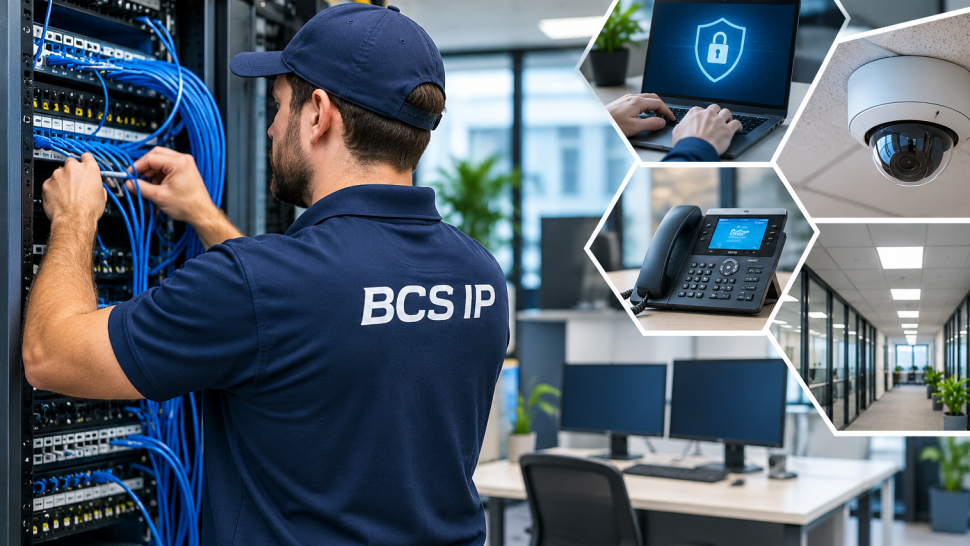

Technology plays a major role in everyday business operations. From cloud-based applications and digital communication to cybersecurity and network connectivity, businesses depend on reliable IT infrastructure to remain productive.
However, managing computers, servers, networks, and security systems can become challenging as organizations grow. Unexpected technical issues, outdated equipment, and network interruptions can affect employees and business operations.
Professional managed IT services and network cabling solutions help businesses maintain dependable technology systems while preparing for future growth.
For companies operating in Austin and Houston, Texas, having access to experienced IT professionals can make network management and technology maintenance more efficient.
What Are Managed IT Services?
Managed IT services involve outsourcing selected technology management responsibilities to a professional IT service provider.
Instead of waiting for technical problems to occur, managed service providers use proactive monitoring, maintenance, and technical support to identify potential issues and maintain business systems.
Common managed IT services include:
Network monitoring and maintenance
Computer and server management
Cybersecurity support
Data backup and recovery
Software updates and troubleshooting
Cloud and Microsoft 365 support
IT infrastructure management
Remote and on-site technical assistance
Businesses seeking managed IT services in Austin can benefit from professional support tailored to their technology requirements.
Why Managed IT Services Matter for Businesses
1. Reduced Network Downtime
Network interruptions can disrupt communication, customer service, and employee productivity.
Regular system monitoring and preventive maintenance help identify potential technical problems before they become more serious.
2. Improved Cybersecurity
Cybersecurity is an important concern for businesses of all sizes.
Managed IT services can support network protection through firewall management, endpoint security, software updates, and security monitoring.
3. Better IT Cost Management
Maintaining a full internal IT department may not be practical for every organization.
Managed IT services allow businesses to access technical expertise through defined service agreements and support plans.
4. Scalable Technology Solutions
As businesses expand, their technology needs change.
Managed IT providers can help organizations add new devices, upgrade networks, and support additional employees or locations.
The Importance of Professional Network Cabling
Reliable network connectivity starts with properly installed cabling infrastructure.
Even advanced computers and networking equipment may experience performance limitations when connected through damaged, outdated, or poorly organized cables.
Professional network cabling services help businesses establish structured connections between computers, servers, switches, wireless access points, and communication systems.
Structured Cabling
Structured cabling creates an organized system for transmitting voice and data throughout a building.
It simplifies troubleshooting, supports equipment changes, and makes future network expansion easier.
Ethernet Cabling
Cat6 and Cat6A Ethernet cabling are commonly used in commercial networks to support business connectivity.
The appropriate cable category depends on network speed requirements, installation distance, and equipment compatibility.
Fiber Optic Cabling
Fiber optic cabling provides high-bandwidth connectivity and is particularly useful for long-distance connections, network backbones, and data-intensive environments.
Businesses may use fiber optics to connect buildings, network rooms, and other important infrastructure.
Voice and Data Cabling
Voice and data cabling supports business telephone systems, computers, and network-connected equipment.
Proper installation and cable management help maintain organized communication infrastructure.
Cybersecurity and Business Network Protection
A reliable business network must also be protected against security threats.
Phishing attacks, malware, ransomware, and unauthorized access can affect business operations and sensitive information.
Organizations should consider several essential cybersecurity practices:
Implementing multifactor authentication
Keeping operating systems and applications updated
Using appropriate firewall and endpoint protection
Training employees to recognize suspicious messages
Maintaining tested data backups
Restricting access to sensitive systems
Monitoring network activity for unusual behavior
Combining network maintenance with cybersecurity practices helps businesses build a stronger technology environment.
Security Cameras and Access Control Systems
Modern business infrastructure often includes physical security technologies alongside traditional IT equipment.
Commercial security camera systems can help organizations monitor entrances, parking areas, warehouses, and other designated spaces.
Access control systems allow businesses to manage entry permissions for employees and authorized visitors.
Both systems depend on suitable network infrastructure, power arrangements, and proper installation.
Integrating these technologies into an organized infrastructure plan can simplify maintenance and future upgrades.
How Businesses Can Choose the Right IT Service Provider
Selecting a suitable IT company requires evaluating both technical capabilities and business requirements.
Organizations should consider the following factors:
Experience: Look for a provider familiar with commercial IT infrastructure, network troubleshooting, and business communication systems.
Range of services: A provider offering managed IT, cabling, cybersecurity, and network support may simplify coordination across technology projects.
Service availability: Understand the provider's support hours, emergency response arrangements, and on-site service coverage.
Customized solutions: IT requirements vary between offices, retail businesses, warehouses, and other commercial environments.
Scalability: Choose technology solutions that can accommodate additional employees, devices, and business locations.
BCS IP: Business IT and Network Infrastructure Solutions in Texas
BCS IP (Business Communication Solutions) provides IT support and low-voltage technology services for organizations in Austin, Cedar Park, Houston, and surrounding Texas communities.
Established in 2004, the company has expanded its services to support modern business technology requirements.
Its service offerings include managed IT support, structured network cabling, fiber optic installation, cybersecurity, VoIP phone systems, security camera installation, and access control systems.
BCS IP works with businesses to address network connectivity, IT maintenance, communication infrastructure, and security requirements.
Companies exploring professional IT support and infrastructure services can learn more through the official website:
Website: https://bcs-ip.com/
Austin/Cedar Park Office: 102 Wigeon Cv, Cedar Park, TX 78613
Phone: +1 (512) 257-1433
Houston Office: 12345 Jones Rd, Suite 246, Houston, TX 77070
Phone: +1 (281) 815-8784
Conclusion
Reliable technology infrastructure is essential for businesses that depend on digital communication, secure data access, and consistent network performance.
Managed IT services help organizations maintain computers, servers, and network systems, while professional cabling solutions provide the physical infrastructure needed for business connectivity.
By combining proactive IT support, structured network cabling, cybersecurity, and scalable communication solutions, businesses in Austin and Houston can develop technology environments that support their daily operations and long-term growth.



Share the News