

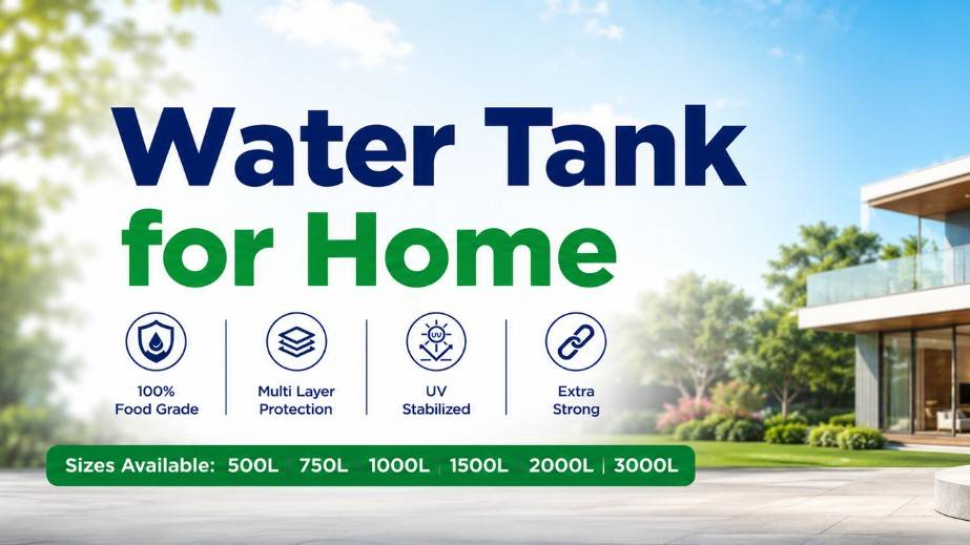

Water runs your daily routine. You cook with it, bathe with it, wash clothes with it and water the garden with it. When the municipal supply fails or arrives only for an hour a day, your storage becomes the thing that keeps the house running.
That is why choosing a water tank for home deserves real thought. A tank that is too small causes shortages. A tank made from weak material can crack, grow algae or spoil your drinking water. This guide covers what to check before you spend your money.
Why Does a Water Tank for Home Matter So Much?
A home tank does three jobs at once.
It stores water safely until your family needs it.
It protects water quality by keeping out dust, insects, sunlight and outside contamination.
It gives you a buffer during supply cuts, pipeline repairs or dry summer months.
A poor tank fails at the second job first. Water in a badly made tank can turn green, smell stale or pick up sediment within months. A good tank keeps water clean and ready for years.
How Much Capacity Does Your Home Need?
Capacity is the first decision, and the most common mistake. Many buyers simply pick the biggest tank that fits on the roof. A better approach is to match the tank to your household.
A common planning figure for Indian homes is about 135 litres per person per day. A family of five would use roughly 675 litres daily. Use that number as a starting point, then add a buffer for your supply pattern.
As a general guide:
500 to 1000 litres: suits small families with a steady supply.
1500 to 2000 litres: suits larger families, homes with several bathrooms, or areas where water arrives irregularly.
2000 litres and above: suits villas, duplexes and independent houses that want a strong reserve.
A 2000 litre water tank is popular because it gives a family of five or six more than two days of backup. It also copes better with weak supply and heavy daily use.
What Material Should a Water Tank for Home Use?
Material decides how safe and how durable the tank will be. Most modern plastic tanks use polyethylene, and quality varies a lot between brands.
Look for these qualities:
Food-grade virgin material. It is safe for storing drinking water and does not leach unwanted substances.
Non-corrosive build. Plastic does not rust like metal, so it avoids brown stains and metallic taste.
Lightweight design. Easier transport and installation, with less load on your roof.
Crack and weather resistance. The tank must handle heat, rain and daily temperature swings.
Ask the seller what raw material goes into the tank. A trusted manufacturer will answer clearly. You can also read about Indian standards for storage tanks on the BIS website.
Why Is UV Protection Important?
Most home tanks sit on the terrace under direct sun for most of the day. Sunlight heats the water and speeds up algae growth. It also breaks down unprotected plastic over time, which makes it brittle.
A UV-stabilised tank resists this damage. It lasts longer, stays cleaner and keeps stored water cooler. If your tank will sit outdoors, treat UV protection as a must, not an extra.
What Does Multi-Layer Construction Add?
Some tanks use more than one layer of material. Each layer has a job. The outer layer handles sunlight and weather. The inner layer touches the water and stays hygienic. A middle layer can add strength and insulation.
This design offers three real benefits:
Better heat resistance, so water stays cooler in summer
Higher strength, so the tank holds its shape over the years
Less light passing through, which slows algae growth
If your budget allows, a multi-layer tank is a smart long-term choice.
Why Does the Manufacturer Matter?
Two tanks can look identical and perform very differently. The difference lies in raw material quality, moulding process and quality testing. A reputable manufacturer controls all three.
Before you buy, check these points:
Does the brand use food-grade raw material?
Does it test its tanks for strength and leaks?
Does it offer clear product information and customer support?
Does it have a long track record in water and piping products?
Ajay Pipes is a trusted name in plumbing and water solutions across India. The brand builds its tanks with food-grade materials, UV stabilisation, multi-layer construction and leak-resistant design. You can see the full company profile on the Ajay Pipes website.
Where and How Should You Install the Tank?
Even the best tank performs badly if you install it poorly. Follow these basics:
Use a flat, strong platform. An uneven base stresses the tank walls and can cause cracks.
Support the full base. The platform should carry the tank evenly, especially when full.
Fit proper inlet, outlet and overflow lines. Use matching pipes and fittings so joints stay leak free.
Keep the lid fitted. A closed lid blocks dust, insects and light.
Leave space around the tank. You need room to open the lid and clean the inside.
Good plumbing connections matter as much as the tank. Poor joints cause leaks, wasted water and wet walls.
How Often Should You Clean a Water Tank?
Clean your tank every six to twelve months. Sediment settles at the bottom over time, and even a closed tank collects some dirt. Regular cleaning keeps water safe and extends the life of the tank.
Follow this simple routine:
Empty the tank and scrub the inside with a soft brush
Rinse until the water runs clear
Check the lid, inlet and outlet for damage
Look for cracks or leaks around fittings
Refill and keep the lid closed
Avoid harsh tools or strong chemicals that could scratch or weaken the inner surface.
What Mistakes Should You Avoid?
Homeowners repeat the same errors again and again. Watch out for these:
Buying only on price and ignoring raw material quality
Skipping UV protection for an outdoor tank
Choosing a capacity that does not match family size
Placing the tank on an uneven or weak platform
Never cleaning the tank after installation
Buying from an unknown brand with no support
Avoid these, and your tank will serve you well for many years.
Final Thoughts
The right water tank for home balances capacity, material quality, UV protection and manufacturer trust. Size it to your family, choose food-grade and UV-stabilised construction, install it on a solid base and clean it on schedule. Do that, and you will enjoy clean, steady water all year.
FAQs
1. How do I choose the right water tank for home?
Match the capacity to your family size and daily use. Then check for food-grade material, UV protection and a trusted manufacturer.
2. Is a 2000 litre water tank good for a home?
Yes. It suits large families, villas, duplex homes and areas with irregular water supply.
3. How often should I clean my home water tank?
Clean it every six to twelve months to remove sediment and keep stored water hygienic.
4. Why is UV protection important in a water tank?
UV protection slows algae growth, keeps water cooler and stops sunlight from weakening the tank material.
5. What is the benefit of a multi-layer water tank?
Multiple layers add strength, insulation and light blocking, which helps the tank last longer and keeps water fresher.



Share the News